A few years ago, getting your website onto Google’s first page was the main way to get noticed online. If you picked the right keywords and strategy, customers would find you easily. That still helps, but it’s not enough anymore.
Now, more people are skipping the usual list of links and instead rely on AI assistants like Google Gemini and ChatGPT to answer their questions when researching what to buy. These AI tools don’t just show ten blue links. Instead, they pull information from across the web and give a single, clear answer, usually citing only a few sources.
If your business isn’t one of those sources, people will completely miss you.

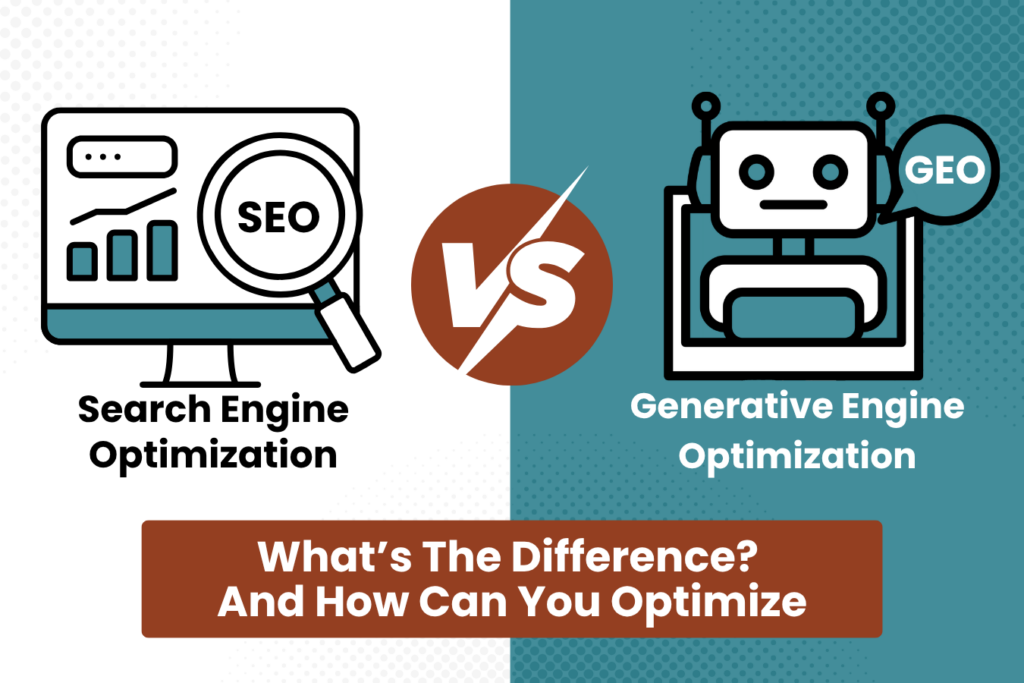
This change in user behavior has led to a new field called Generative Engine Optimization, or GEO. GEO is about organizing your website content and online presence so that AI platforms can find, understand, and confidently cite your business. Learning about GEO and how it’s different from traditional SEO is quickly becoming essential for any business that wants to stay competitive as customers discover brands in new ways.
SEO vs. GEO: What's the Difference?
Most business owners should be familiar with Search Engine Optimization (SEO) by now, but while GEO builds on it, the goals are fundamentally different.
| Traditional SEO | Generative Engine Optimization (GEO) | |
|---|---|---|
| Goal | Rank High in Search Results | Be Cited in AI-Generated Answers |
| How It Works | Keywords, Backlinks, Page Authority | Content Clarity, Entity Trust, and Topical Authority |
| Use Action | User Clicks a Link | AI Reads and Summarizes Your Content |
| Competition | 10 Links per Results page | 2–7 Sources Cited per AI Response |
| Content Style | Keyword-Optimized Pages | Question-and-answer sections, structured headings, & factual information |
Here’s the main difference: SEO is about getting people to click on your page, while GEO focuses on becoming the source that AI quotes when someone asks a question you can answer.
The good news is that strong SEO and GEO have a lot in common. Both start with a well-optimized, trustworthy website. However, GEO also needs some extra steps that most businesses haven’t adopted yet. This gives early movers a real advantage.
Why This Matters for Small and Local Businesses
You may be wondering if AI search is just for big brands, while your customers still rely on Google.
But the data shows something else:
- Over 71% of Americans already use AI search to research purchases or evaluate brands (Adobe via Profound)
- AI-referred website sessions jumped 527% between January and May 2025 (Previsible 2025 AI Traffic Report)
- AI tools usually mention only 2 to 7 websites in their answers, which is much fewer than the ten results Google shows on its first page (Profound Research)
These are not just tech-savvy early adopters. They are everyday people making buying decisions, including your own customers.
For local businesses like those Dot Marketing helps every day, this is especially important. When someone in Rapid City asks an AI tool for a recommendation, the AI will choose which businesses to mention. The ones that appear are not always the biggest or most well-known. AI systems prefer clear and trustworthy information over business size. A local business that has put in the effort can be mentioned before a larger competitor that has not.
6 Proven Steps to Improve Your AI Search Visibility
1. Build a Content Foundation That Answers Real Questions
The best way to improve your AI visibility is to create content that directly answers the questions your customers are asking. AI search engines are designed to handle conversational queries and highlight content that provides clear, direct answers.
Content formats that perform best in AI search:
- FAQ pages and question-based blog posts
- How-to guides with step-by-step structure
- Comparison posts (e.g. "X vs. Y: What's the difference?")
- Detailed service explanations that answer the "why" and "how"
- Definition posts that clearly explain industry terms
How to write for AI citability:
- Start each section with a direct answer in the first 40 to 60 words
- Keep explanations self-contained, so they make sense out of context
- Back up claims with data and cite credible sources
Write the way your customers ask questions, not the way you describe your services.
Every blog post, service page, and FAQ section on your website is a chance to be cited. Write each piece of content as if an AI might pull a passage from it and read it to a potential customer. This is happening more often now.
2. Establish and Strengthen Your E-E-A-T Signals
E-E-A-T stands for Experience, Expertise, Authoritativeness, and Trustworthiness. Google first used this framework to judge content quality, and now AI search engines use it to decide which sources to cite.
AI systems want to answer questions accurately and prefer sources they trust. Here’s how a small business can build E-E-A-T:
Experience
- Include real-world examples and case studies in your content
- Describe your process and how long you've been doing it
- Reference the types of problems you've solved for customers
Expertise
- Have team members author content in their area of specialty
- Include author bios with relevant credentials and experience
- An HVAC technician with 15 years of experience authoring a furnace maintenance post carries more weight than an anonymous company blog
Authoritativeness
- Earn mentions and links from reputable third-party sources
- Be active in industry conversations on social media, in publications, and at events
- Cite credible external sources in your own content
Trustworthiness
- Keep your website secure (HTTPS), accurate, and up to date
- Be active in industry conversations on social media, in publications, and at events
- Cite credible external sources in your own content
3. Get Consistent Across Every Platform Where Your Business Appears
This step might not be as exciting as creating content, but it has a big impact on your AI visibility. When your brand information is consistent across platforms, AI systems can recognize and reference your brand more easily. If details don’t match, your brand is less likely to be mentioned.
What needs to match everywhere:
- Business name (exact spelling and punctuation)
- Address and phone number
- Business description and category
- Hours of operation
- Website URL
Where it needs to match:
- Your website
- Google Business Profile
- Bing Places
- Facebook and Instagram
- Yelp and industry-specific review platforms
- Local chamber of commerce and directory listings
This is sometimes called “entity clarity,” which means making it as easy as possible for AI systems to know who you are, what you do, and where you operate. Local SEO and listing management have always been important for traditional search, and they are just as important for AI visibility.
4. Earn Mentions From Sources Outside Your Own Website
High-value sources for earned mentions:
- Google and Facebook reviews: A steady flow of detailed, recent reviews creates third-party mentions that AI systems use directly. Managing your reviews actively turns this from a random process into a steady way to build authority.
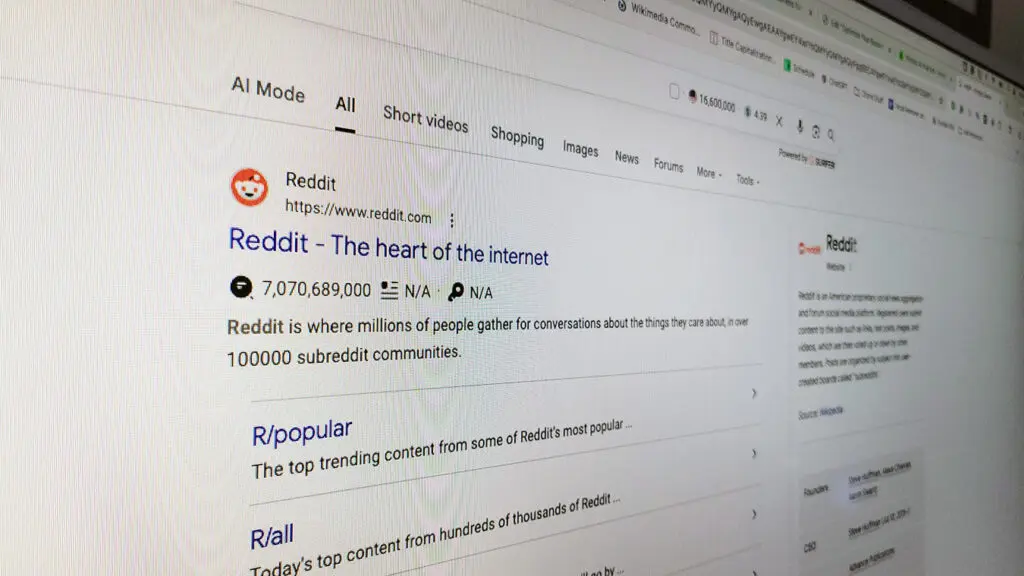
- Social platforms: In 2025, Reddit, LinkedIn, and YouTube were top sources cited by major AI tools. Posting helpful content on these platforms adds to the information AI systems use. A steady, helpful social media presence builds this kind of earned visibility.
- Local and industry directories: Listings in chambers of commerce, industry associations, and niche review platforms all create more citation points that show your relevance to AI systems.
- Press and media mentions: Even one mention in a local news article or regional publication adds valuable third-party validation that AI systems consider important.
The key is that mentions should be earned. AI systems prefer mentions you didn’t pay for or write yourself. These are the closest thing to an independent endorsement that an algorithm can recognize.
5. Structure Your Website So AI Can Actually Read It
Even great content might not get cited if your website isn’t structured for AI systems to read easily. AI tools usually pull out individual passages, not whole pages, so structure and clarity matter more than length.
Technical website elements that directly impact AI citability:
Clean Heading Hierarchy
Use H2 and H3 headings in a logical way throughout your content. Each section should have a clear, descriptive heading that tells both readers and AI systems what it covers.
FAQ Sections on Key Pages
Each question-and-answer pair is a self-contained piece of information that AI can easily use and cite. If someone asks an AI a question that matches your FAQ, your content is more likely to be cited. This is one of the most effective GEO tactics you can use.
Schema markup
Schema is a technical layer of code that helps search engines and AI systems understand the structured data on your site, like your business name, location, hours, services, and reviews. A well-built website should have this set up correctly from the start.
Mobile Performance and Page Speed
AI crawlers consider technical accessibility in the same way search engine bots do. A slow or mobile-unfriendly site is harder to crawl and less likely to be fully indexed, so fewer of your pages reach AI systems.
6. Think in Topics, Not Just Keywords
Traditional SEO focused on individual keywords. GEO takes a broader approach: What topics does your business really cover, and are you providing enough depth for AI to see you as an authority?
Keyword-heavy content doesn’t work in AI search because these systems look for concepts and context, not just repeated keywords. A page that explains a topic well with examples and clear structure will do better than one that just repeats target phrases.
How to build topical authority:
- Identify the 2–3 core topic areas where your business has real expertise
- Create multiple pieces of content that cover those topics from different angles
- Link related content together so AI systems can see the depth of your coverage
- Update older content regularly to signal that your expertise is current

For example, a landscaping company with ten detailed, well-written posts about lawn care, seasonal maintenance, and plant selection for the local climate is building topical authority that AI systems will recognize and cite. A company with only a generic “About Us” page and a service list is not.
This is where thoughtful content and SEO strategy pay off beyond traditional search. The same work that improves your Google rankings also builds the topical depth that makes you citable in AI results.
GEO Takes Time, So Start Today
GEO is not a quick fix. It works best as a long-term approach to building visibility, not just a short-term tactic. The businesses showing up in AI results today spent months or years building their content, authority, and online presence. Many did this without realizing it would help them adapt to these changes.
Right now, most small businesses haven’t begun this work. AI tools usually mention just two to seven websites in each answer, and it will only get harder to earn those spots. If you start now, even with small and steady efforts, you’ll give yourself a real advantage.
The good news is that the basics of strong GEO are the same as the basics of good marketing:
- Create genuinely helpful content
- Earn real credibility over time
- Stay consistent and keep your information up to date
- Build trust with your customers and your community
These habits have always been important. Now that customers often turn to AI first, they matter even more.
How Dot Marketing Helps Your Business with GEO
At Dot Marketing, GEO isn’t a separate add-on; it’s built into how we approach SEO, content strategy, social media, and local listings management for every client. The same work that builds your search rankings also builds your AI visibility, and it’s done with the right structure and intent.
If you are unsure if your business appears to AI search tools or worried about where your biggest gaps might be, a Marketing Consultation is a great first step. We will honestly review what is working, what is missing, and which steps make the most sense for your current situation.
Today, AI is often the first voice a customer hears. Being the business that AI recommends is more important than ever, and Dot Marketing can help you stand out.

Ready to Build a Marketing System That Works at Every Stage?
Schedule your free consultation with Dot Marketing today. Get results, not just activity, the only metric that matters.